Previous Research

Selected research highlights

Research and engineering, mostly from the years before my PhD: machine learning on national health data, physics-informed neural networks, measurement and IoT systems, research test stands for Nazarbayev University faculty and PhD students, and student engineering teams. My current work is on the Materials Science Research page, and the full publication list is on Google Scholar.

Research and publications

2021–2022 · Nazarbayev University School of Medicine

Machine learning on national health data

Research Assistant on a Ministry of Education and Science grant (supervisors Prof. Abduzhappar Gaipov and Dr. Amin Zollanvari). I used machine learning on administrative healthcare data from Kazakhstan's Unified Electronic Healthcare System (UNEHS) to predict 1-year mortality of patients with diabetes mellitus. This project was the start of my path into machine learning.

A. Alimbayev et al., Scientific Reports 13, 8412 (2023), first author. Also a co-author of a review of the UNEHS research databases, International Journal of Medical Informatics 170, 104950 (2023).

Animated comparison of a PSO-PINN solution of Burgers' equation with a quadrature reference

2022 · Texas A&M University

Physics-informed neural networks with particle swarm optimisation

Visiting Scholar in Prof. Ulisses Braga-Neto's group (Department of Electrical and Computer Engineering, Aug–Dec 2022), funded by a Shakhmardan Yessenov Foundation fellowship. I worked on physics-informed neural networks for complex systems and on stacked generalisation with particle swarm optimisation.

Animation: a preliminary run of PSO-PINN (the particle-swarm-trained PINN of C. Davi and U. Braga-Neto) on Burgers' equation, compared with a quadrature reference.

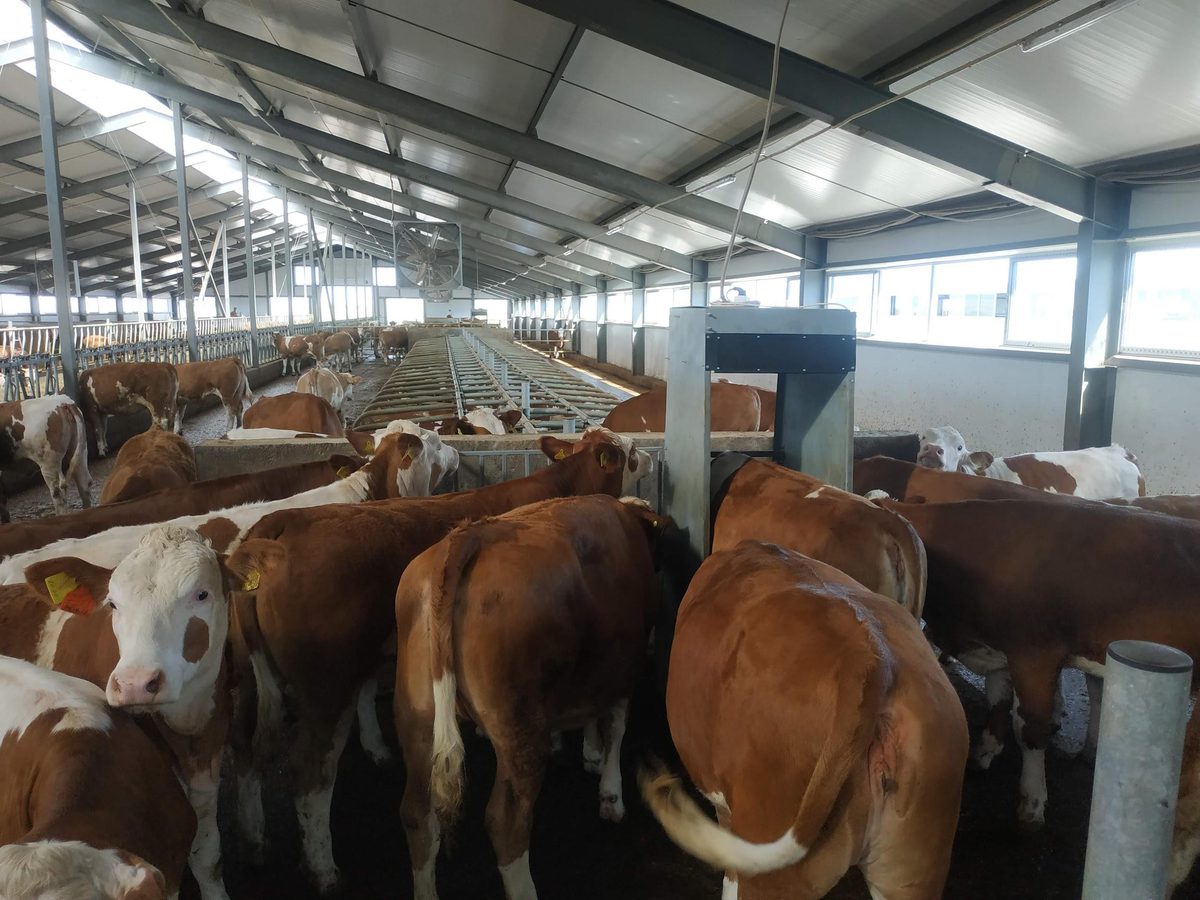
Cattle around the automated weighing station in a dairy barn

Precision livestock farming · ASTES Journal 2021

IoT platform for stress-free monitoring of cattle productivity

An automated weighing station for a dairy farm, in a project managed by the Ministry of Agriculture of Kazakhstan. I designed the system structure, sourced the electrical components and wrote the data-collection software: the station reads each cow's RFID tag and weight (load cells up to 1000 kg), and a Raspberry Pi unit (Python, SQLite) sends the records to a web server.

A. Mirmanov, A. Alimbayev et al., Advances in Science, Technology and Engineering Systems Journal 6(1), 501–508 (2021), second author.

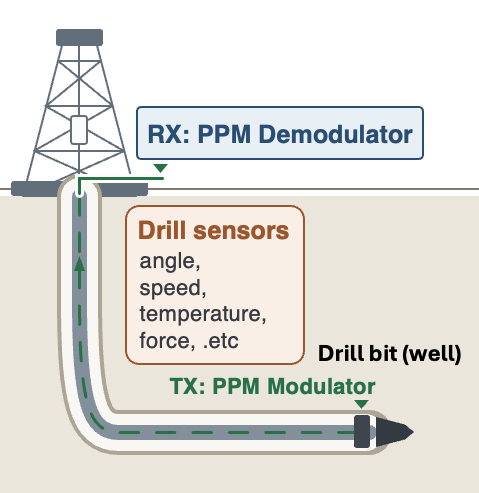
Concept diagram of microwave PPM telemetry from a drill bit to a surface receiver

BSc research · S. Seifullin Kazakh Agro Technical University

Microwave telemetry for horizontal drilling

For my BSc capstone I built a stand that measures microwave transmission from a Gunn-diode source through cylindrical waveguides filled with clay, granite and sand, as a model of telemetry through drill pipes, and compared it with a propagation model; measurements and model showed similar asymptotic behaviour. Our team's pulse-position modulation link on NI FPGA boards was published at IEEE SIBCON 2015.

S. B. Baiguanysh, A. B. Mirmanov, A. Alimbayev, A. Y. Makartseva, Implementation of PPM modulation and demodulation using NI Digital Electronics FPGA board, IEEE SIBCON 2015.

Supercapacitor test stand on a lab bench with the LabVIEW control panel on a laptop

2016–2017 · Bonch-Bruevich St. Petersburg State University of Telecommunications

Test stand for mobile power-supply sources

At the TIOS scientific-educational centre I built a two-channel charge/discharge stand (NI USB-6001 DAQ, LabVIEW) that cycles experimental supercapacitors (ionistors) non-stop, logs all readings to an Excel file and switches on cooling fans above 50 °C. In two weeks of testing, capacitance fell to about 3.3 kF and kept declining with every cycle.

A. Alimbayev, V. S. Uss, A. B. Mirmanov, P. P. Shumakov, Test stand for prospective mobile power-supply sources, IEEE SIBCON 2017, first author.

Research test stands and engineering projects

From 2018 to 2024 I was an engineer at the Nazarbayev University Fab Lab and prototyping centre, building experimental stands for faculty and PhD projects. In 2023–2024 I also worked with InPro-Tech on an energy-efficiency controller that was piloted at NU.

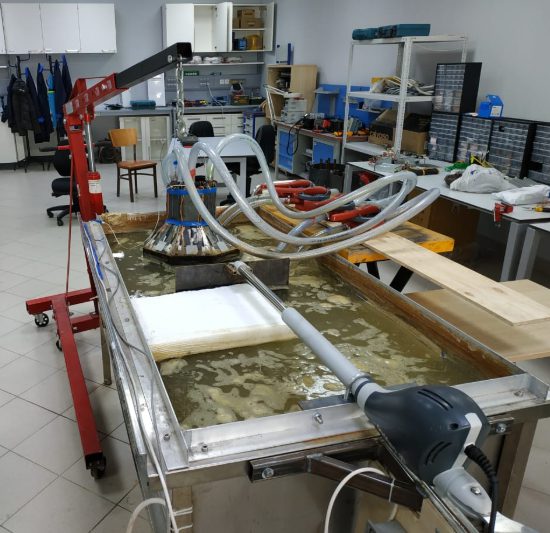
Offshore platform model in the water tank of the ice-load test stand

For a PhD student's project at NU

Ice-load fatigue stand for an offshore platform model

I built every part of the stand: a steel mono-tower platform model in a water tank, loaded with simulated ice through a gate actuator. An Arduino Mega reads 16 strain-gauge sensors (firmware in C++) and streams the data to a real-time MATLAB dashboard that logs to CSV, for fatigue studies planned to run for up to six months.

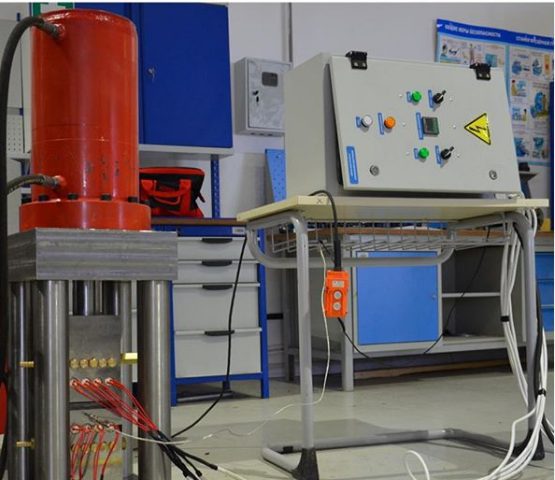
Hot-press stand with a hydraulic cylinder, heated block and control cabinet

For Prof. Christos Spitas

Hot press for shape-memory metal sheets

Control engineer on the team that built a press producing bimetallic aluminium and titanium sheets with shape-memory effect, for vibration- and weight-optimised satellite structures: two sheets are pressed and bonded at up to 600 °C in about 15 minutes. My part was the power switching, PT-100 temperature sensing and Siemens-based thermal regulation; residual heat made temperature control one of the hardest parts.

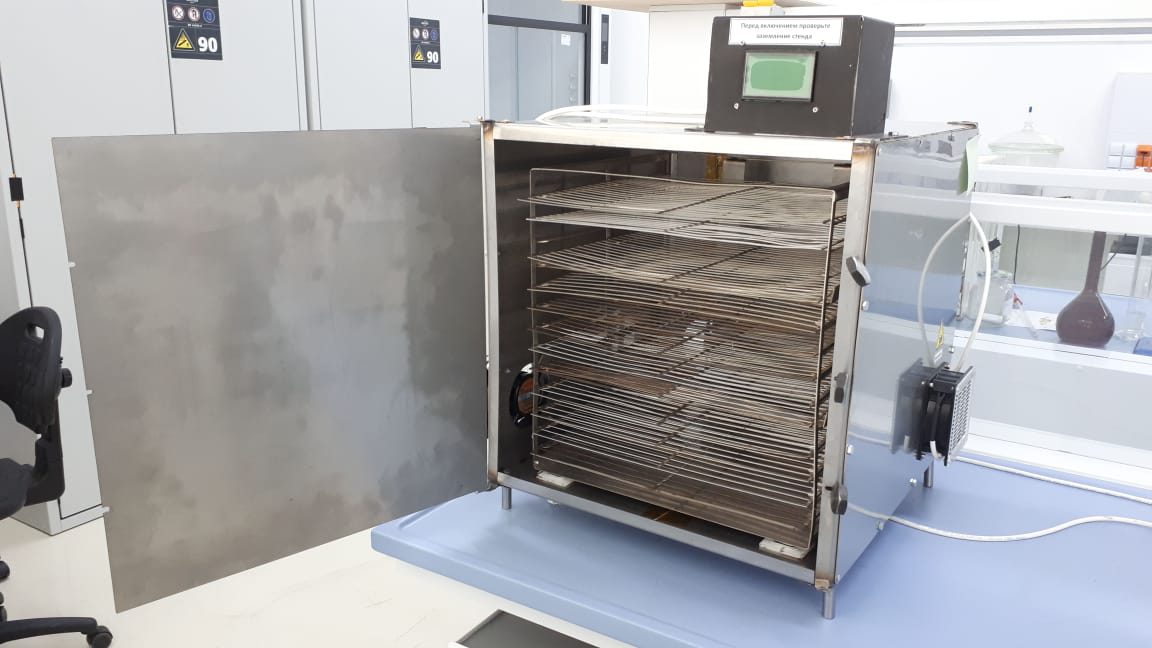
Stainless-steel drying cabinet with stacked trays

For Prof. Sergey Spotar

Controlled convective drying stand

Part of the team that built a stand for studying the convective drying of apple rings, following the professor's structural scheme: an air-heating module, a fan with speed control, and a desiccator cabinet with stacked trays on scales.

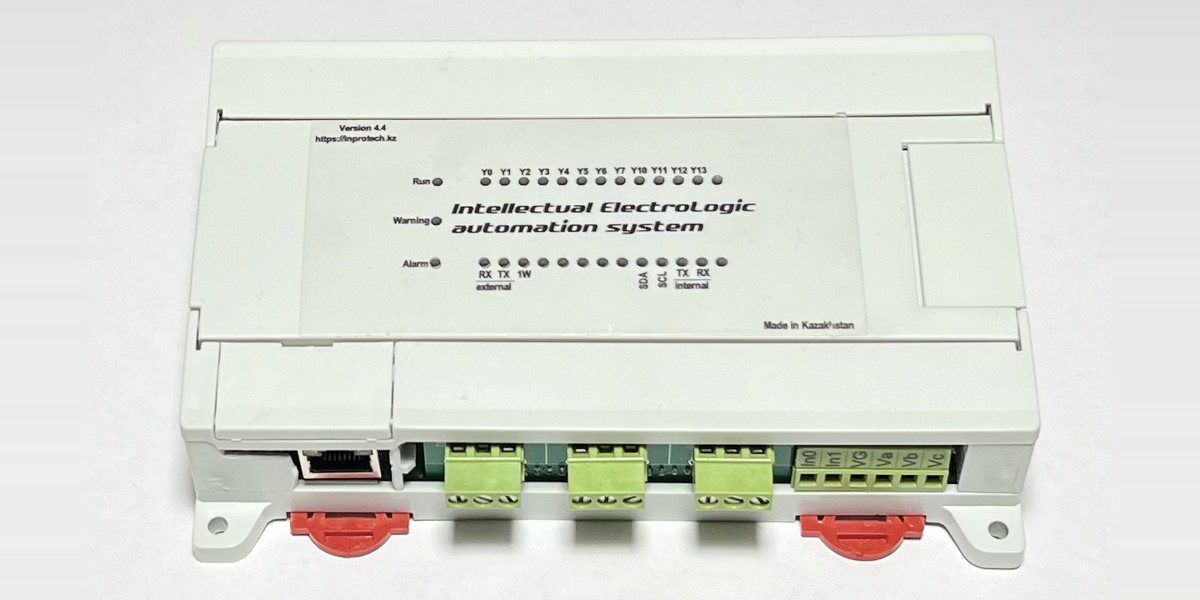
ElectroLogic programmable logic controller, version 4.4, in a DIN-rail housing

2023–2024 · InPro-Tech LLP, Astana

ElectroLogic controller for building energy efficiency

Project team member on InPro-Tech's ElectroLogic innovation project, funded by a QazInnovations technology-commercialisation grant: the development and pilot testing of a 12-channel programmable logic controller to improve the energy efficiency of administrative buildings. The project was completed in 2024, with 10 controllers installed at Nazarbayev University.

Student teams and laboratories

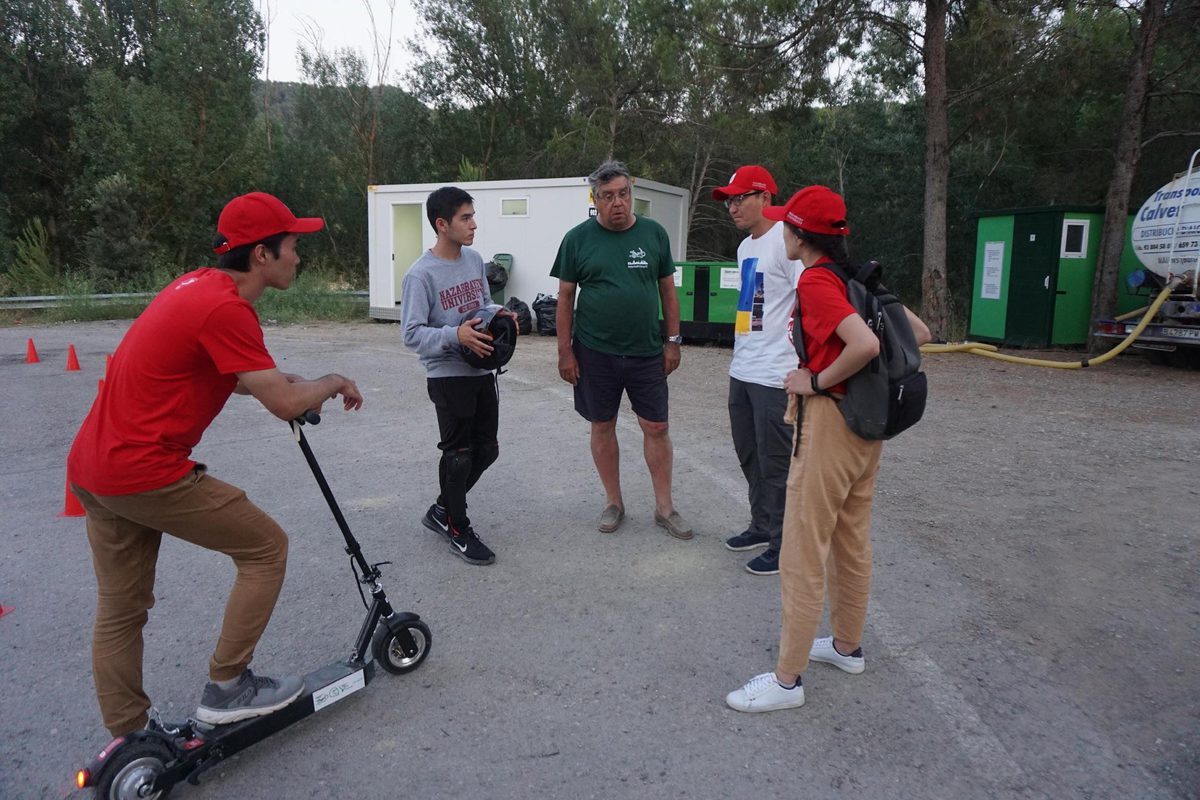
Nazarbayev University team with the electric scooter at the Castellolí Smart Scooter Challenge 2019

2019 · Castellolí, Spain

Smart Scooter Challenge: 1st place in two categories

I supervised the four-student Nazarbayev University team that built an electric scooter in six months of evenings at the Fab Lab, with a fast-stop control system and an Android remote-control app; I advised the team and managed the procurement. The scooter won both the dynamic and the static events.

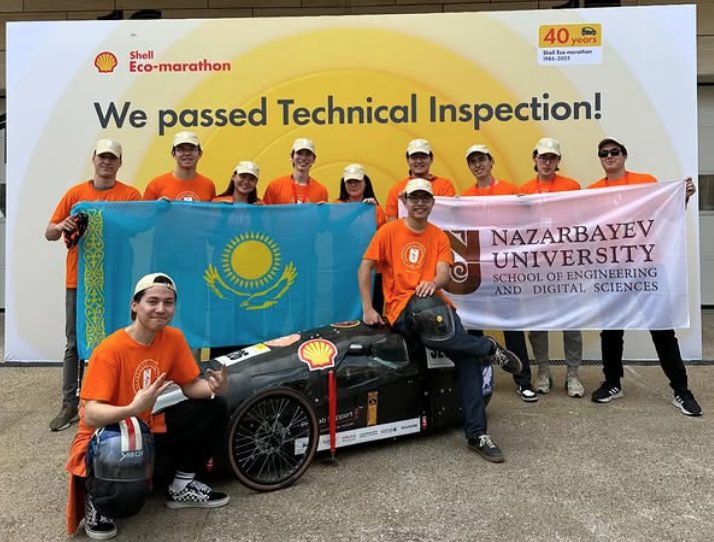
Nazarbayev University Shell Eco-marathon team after passing technical inspection

2018–2025 · Singapore, Indonesia, Qatar

Shell Eco-marathon student teams

Technical supervisor of Nazarbayev University teams that design and build energy-efficient electric prototype cars, from a carbon-fibre monocoque to STM32-based motor control. Several team batches competed at Shell Eco-marathon events in Singapore, Indonesia and Qatar.

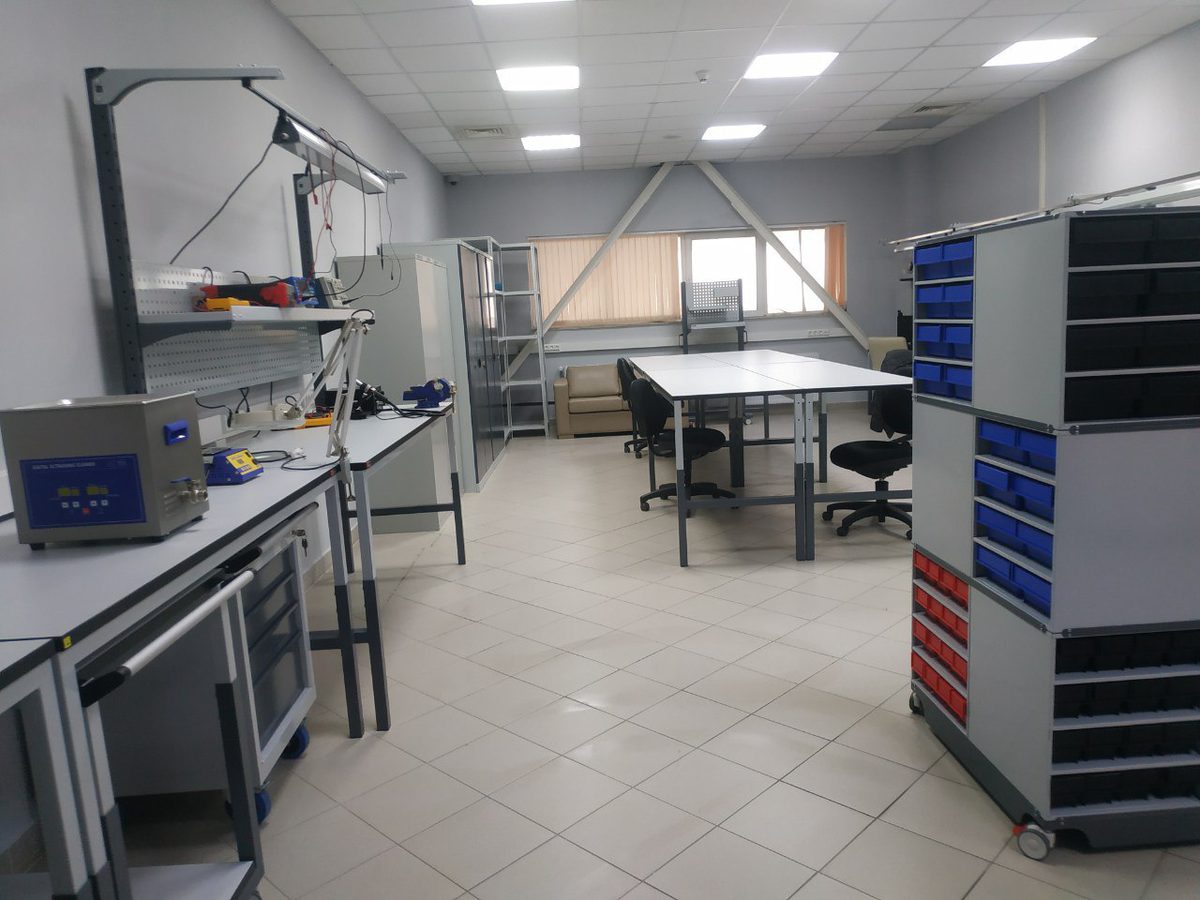
Electronics workshop at Nazarbayev University

Seifullin University and Nazarbayev University

Electronics laboratories and teaching

I set up two electronics laboratories, at Seifullin University and at Nazarbayev University, planning the equipment, budgets and procurement; students continued the projects we had started and formed clubs and teams, and the Seifullin lab, which has equipment for placing SMD components, went on to host IoT and LoRaWAN projects. I taught digital signal processing and LabVIEW at Seifullin University (2017–2018) and ran an Arduino course for a robotics teachers' club (2018) and a MATLAB course for beginners at NU (2019).

Contact

Let's connect

Use the form below or email me at aidar.alimbayev@mbzuai.ac.ae.